How to select a wire drawing lubricant for steel wire rope (dry drawing)
A practical guide to selecting dry soap powder lubricants for high-carbon rope wire, with failure-mode checks and a trial protocol.
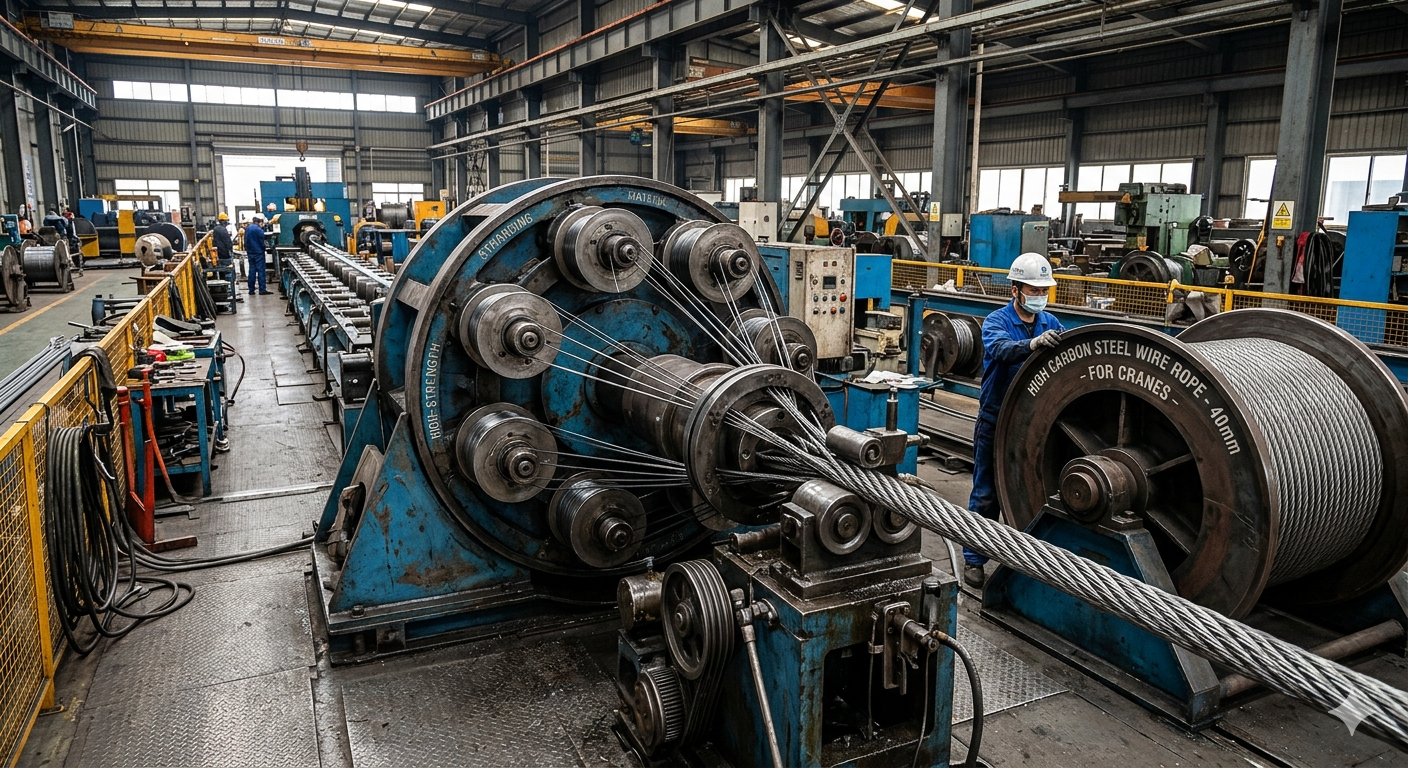
If you run high-carbon rope wire, you’ve probably seen this movie before: die life starts shrinking, wire breaks spike during a speed push, or the surface comes out with a haze of scratches that nobody can explain. A lot of teams blame the die. Or the rod. Or the operator.
Often, it’s the lubricant match.
A “good” wire drawing lubricant for steel wire rope isn’t the one with the best brochure. It’s the one that forms a stable film in your dies at your temperatures and reductions, without turning the line into a housekeeping nightmare.
This guide is written for dry drawing (soap powder in a soap box) and focuses on high-carbon rope wire where pressure and heat are less forgiving.
What’s different about high-carbon rope wire
Steel wire rope is made from many individual wires. That pushes rope-wire producers toward high tensile strengths, tight diameter control, and consistent surface quality. In practice, that means:
Higher contact pressure in the die (especially early passes)
More heat (from friction and deformation)
Less tolerance for friction spikes (wire breaks happen fast)
Surface defects that travel downstream (stranding, galvanizing, fatigue performance)
For lubrication, the goal is simple: keep the wire and die separated by a film as much as the process allows, and keep that film consistent.
According to an overview of dry wire drawing lubricants from WESPEC in “Lubricants for Wire Drawing for Welding Consumables Production” (2025), dry drawing commonly uses powder mixtures based on soap plus carriers/additives such as graphite and lime. That mix has to do a hard job: adhere to the wire, enter the die, and turn into a lubricating film under pressure.
Dry drawing basics (in plain language)
If you don’t work with lubrication every day, the jargon can hide what’s really happening. These are the terms that matter for wire drawing soap powder selection.
Dry lubricant powder, soap box, and pickup
Dry wire drawing lubricant powder is usually a metal-soap-based powder (often sodium, calcium, or a blend) with additives.
The soap box is where the wire picks up powder before entering the die.
Pickup is how much lubricant actually adheres to the wire surface and survives into the die.
If pickup is unstable, everything downstream becomes unstable: friction, heat, surface finish, die wear.
Film formation and softening behavior
In dry drawing, the lubricant isn’t supposed to stay as a dry dust. Under pressure and heat, it should soften and form a film that can shear and flow.
A useful way to think about it is: the lubricant needs a softening behavior that matches your line. Too “hard” and it doesn’t form a film early enough. Too “soft” and it can smear, build residue, or degrade.
Kyoeisha describes dry drawing lubricants as forming a film between wire and die to reduce the energy needed for drawing on their page “Wire Drawing Lubricant (Dry)” (2022). That’s the target state.
Die geometry still matters (even with the best soap)
No lubricant can fully compensate for a geometry problem.
A technical study on the effect of tool geometry and lubrication conditions in “Analysis of Tool Geometry and Lubrication Conditions…” (ASTRJ, 2022) highlights that drawing behavior depends on multiple interacting parameters, including die geometry and lubrication conditions.
In other words: if a lubricant trial fails, don’t assume the powder is wrong until you’ve confirmed the die is in spec and the soap box setup is consistent.
Wire drawing lubricant for steel wire rope: selection criteria that actually matter
Here’s the shortcut: when you evaluate a wire drawing lubricant for steel wire rope, stop asking “Which soap is best?” and start asking “Which soap is stable under my draft schedule?”
1) Can it build a film quickly in the first severe passes?
For high-carbon rope wire, the first tough passes are often where you win or lose. You want a lubricant that:
picks up reliably (wire comes out of the soap box consistently coated)
doesn’t starve the die under pressure
resists heat-driven breakdown
A practical note: if you’re getting early-pass breaks, a finishing-oriented powder is usually the wrong tool.
2) Does the softening range match your actual temperatures?
You don’t need a lab number to use this concept. You need to connect lubricant behavior to what your line is doing.
If the powder stays too dry and “crumbly” at the die entry, film formation can lag.
If the powder turns pasty and builds residue quickly, your softening behavior is too aggressive for the local temperature and pressure.
This is one reason experienced plants don’t select lubricants by a single spec. They select by behavior under production conditions.
3) Is pickup predictable with your surface prep and carrier system?
Pickup depends on:
rod surface condition and scale
any pre-coating or carrier layer
soap box design, powder depth, and wire path
powder condition (moisture, agglomeration)
A discussion of lubricant powder selection from UKO Wire Tools in “The Secrets You Need Know of Wire Drawing Lubricant Powder” (2023) emphasizes adhesion/pickup and extensibility as central requirements in practice.
4) Does it control dust and housekeeping without sacrificing performance?
Dry drawing plants often accept dust as “normal.” But dust isn’t just a cleanliness issue. Dust can also signal:
poor pickup (powder isn’t binding to the wire)
excessive feed
powder degradation (caking, poor flow)
If you’re targeting higher speeds, dust control matters because it can become the limiting factor for stable operation and EHS.
5) Can you remove residues for downstream needs?
Rope wire may go through heat treatment, coating, or galvanizing. Residue that is tolerable on one product becomes a defect on another.
So “good lubricant” includes cleanability, not just friction reduction.
Calcium soap vs sodium soap wire drawing: a practical way to choose
Most teams eventually discover a pattern:
The early, severe passes want toughness.
The later, faster passes want cleanliness.
That’s the core difference between calcium and sodium soaps in many ferrous lines.
Calcium-based powders (common in severe conditions)
Calcium soaps are often chosen when you need strong adherence and film strength under higher pressure and heat. The trade-off can be more residue and more cleaning work, depending on formulation and additives.
Sodium-based powders (common in cleaner, faster stages)
Sodium soaps are often chosen where cleanability and surface finish are priorities, particularly in later passes. The trade-off is that a sodium-only approach can be less forgiving if you push it into severe early-pass conditions.
Mixed or staged approaches
Many plants don’t treat this as an either-or decision.
A common approach is staging: tougher chemistry early, cleaner chemistry later. Another approach is using blended bases designed to cover a wider operating window.
For a general technical reference that dry lubricants include sodium, calcium, and mixed bases, see Condat’s “WM – Dry lubricants” selection guide (PDF).
Pro Tip: If your team argues calcium vs sodium without mentioning which pass, you’re not having the right conversation. Write down your pass schedule, reductions, and exit temperatures first.
Additives and “extras” that matter in rope wire
Base soap chemistry matters, but additives often determine whether a lubricant is stable at speed.
Graphite and solid lubricants
Graphite is commonly used in dry drawing powders to improve lubricity and film behavior under pressure. It can help reduce friction spikes, but it can also influence residue and downstream cleanliness.
Extreme-pressure (EP) and anti-wear additives
High-carbon rope wire is hard on dies. EP and anti-wear additives aim to reduce metal-to-metal contact when the film is thin.
If your die life is collapsing while breaks stay “acceptable,” you may be in a boundary-lubrication regime where EP performance becomes decisive.
Anti-dust and flow behavior
Powder that bridges, cakes, or tunnels in the soap box leads to fluctuating pickup.
A practical clue: if you see the wire alternately too dry and then overloaded, treat your powder condition and soap box behavior as part of the lubrication system, not as an operator problem.
The red-flag symptoms of a bad lubricant match
When lubrication is wrong, the line usually tells you. The mistake is treating symptoms separately instead of tracing them back to film behavior.
Symptom 1: Wire breaks cluster after speed changes
Common lubrication-related causes:
pickup is marginal at baseline, and speed push crosses the threshold
lubricant softens too early and leaves the die entry starved
residue or debris in the die increases friction locally
⚠️ Warning: A lubricant that “works” only when you baby the speed is not working. It’s sitting on the edge of failure.
Symptom 2: Die life drops and drawing force creeps up
If you track drawing force or power consumption, lubrication issues often show up as a slow upward trend.
Die-management notes from Wire & Cable India in “Dies Management in Wire Drawing Industry” (2015) discuss how die zones influence lubricant flow and wear behavior. If lubricant can’t flow into the contact zone, you can’t buy your way out of wear.
Symptom 3: Surface scoring or a “sandblasted” finish
Surface defects can come from:
insufficient film (metal contact)
contamination in the powder or on the rod
agglomerated powder acting like an abrasive
Before you change lubricant chemistry, confirm the basics: filtration/cleanliness around the soap box, rod preparation stability, and die condition.
Symptom 4: Heavy residue and constant cleanup
Residue isn’t always “too much lubricant.” It can be:
softening behavior mismatch (smears instead of shears)
wrong base soap for that pass
additives that don’t match downstream needs
If residue is driving rework downstream (cleaning, plating issues), that should be a selection criterion, not an afterthought.
A practical trial protocol (what to control and what to measure)
Lubricant trials fail for two reasons:
The powder is wrong.
The trial was noisy, so you can’t tell.
This is how to reduce noise and de-risk changeovers.
Step 1: Lock the process variables you can
Before you start:
confirm die condition (wear state, approach/bearing geometry)
confirm rod surface prep is stable (pickling/coating, descaling, cleanliness)
document the pass schedule (reductions per pass, target speeds)
document soap box settings (powder depth, wire path, any preheaters)
A good trial is boring. That’s the point.
Step 2: Define acceptance criteria in manufacturing terms
Pick a small set of metrics that map to your real costs:
wire breaks per ton (or per shift)
die life (meters/tons between changes) or a proxy like force/power trend
surface finish (visual standards, and Ra if you measure it)
powder consumption per ton
housekeeping time (cleanup frequency, residue buildup)
WESPEC’s 2025 overview (linked earlier) and many supplier trial guides emphasize tracking operational stability, die wear, finish, and consumption trends during lubricant evaluation.
Step 3: Run the trial in stages to reduce risk
If you’re changing chemistry, don’t do it on your highest-risk product first.
start with a controlled batch at conservative speed
verify pickup stability and residue behavior
step up speed and monitor breaks/finish
Keep your previous lubricant ready as a rollback plan.
Step 4: Document what changed
When the trial ends, you should be able to answer:
what pass range improved (early, mid, finishing)
what trade-off appeared (residue vs die life, finish vs speed)
what adjustments were needed (powder feed, box setup)
That’s what turns a trial into a repeatable standard.
Working with suppliers (and why customization is normal)
Two rope wire lines can look identical on paper and still behave differently. That’s why reputable lubricant suppliers treat selection as an application problem, not a catalog problem.
If you want a supplier to be useful, give them:
your wire grade and target tensile range
pass schedule and speeds
typical die material and geometry
known pain points (breaks, residue, die wear)
downstream constraints (galvanizing, cleaning limits)
Some manufacturers, including KRS Lubrication Products, position their dry drawing lubricants around matching fat content/additives to specific processes and validating performance through testing and field trials. That’s the right model for high-carbon rope wire: evaluate, adjust, then standardize.
FAQ
What is the best wire drawing lubricant for steel wire rope?
There isn’t one universal “best.” The best wire drawing lubricant for steel wire rope is the one that produces stable pickup and a consistent lubricating film across your pass schedule, while meeting your residue/cleaning and downstream requirements.
What should I look for in a high carbon steel wire drawing lubricant?
Prioritize stable pickup, a softening behavior that matches your die temperatures, enough film strength for your early severe passes, and residues you can remove for downstream steps like coating or galvanizing.
Should I use dry or wet lubrication for high-carbon rope wire?
For many high-carbon ferrous applications, dry drawing with soap powder is common in earlier passes because it can provide a protective film under high pressure. Wet lubrication is often used for finer sizes or later stages depending on the line design and cleanliness needs.
What causes wire breaks that look like a lubrication problem?
Common causes include low pickup, film breakdown from heat, contaminated powder, and die wear that blocks lubricant flow. Break clusters after speed changes are a frequent sign that lubrication is operating near a failure threshold.
Is calcium soap always better than sodium soap?
Not always. Calcium soaps are often favored in severe early passes, while sodium soaps often perform well in cleaner, faster finishing stages. Many lines use staged or mixed approaches.
Next steps
If you want to turn this into a one-page line-side tool, create a simple checklist your team can use before every lubricant change:
confirm die condition and soap box setup
record pass schedule, speed, and temperature behavior
define 3–5 acceptance metrics (breaks/ton, die life, finish, consumption)
plan a staged trial and a rollback path
That single page prevents most painful “we changed the soap and everything got worse” scenarios.

Stay Updated
Get the latest insights, technology updates, product releases, and application cases from the robotics industry.
Learn More