Welding Wire Drawing: Details to Consider Before You Change Anything
A plant-friendly checklist for drawing MIG and flux-cored wire: calcium vs sodium soaps, powder handling, failure modes, and a trial protocol.
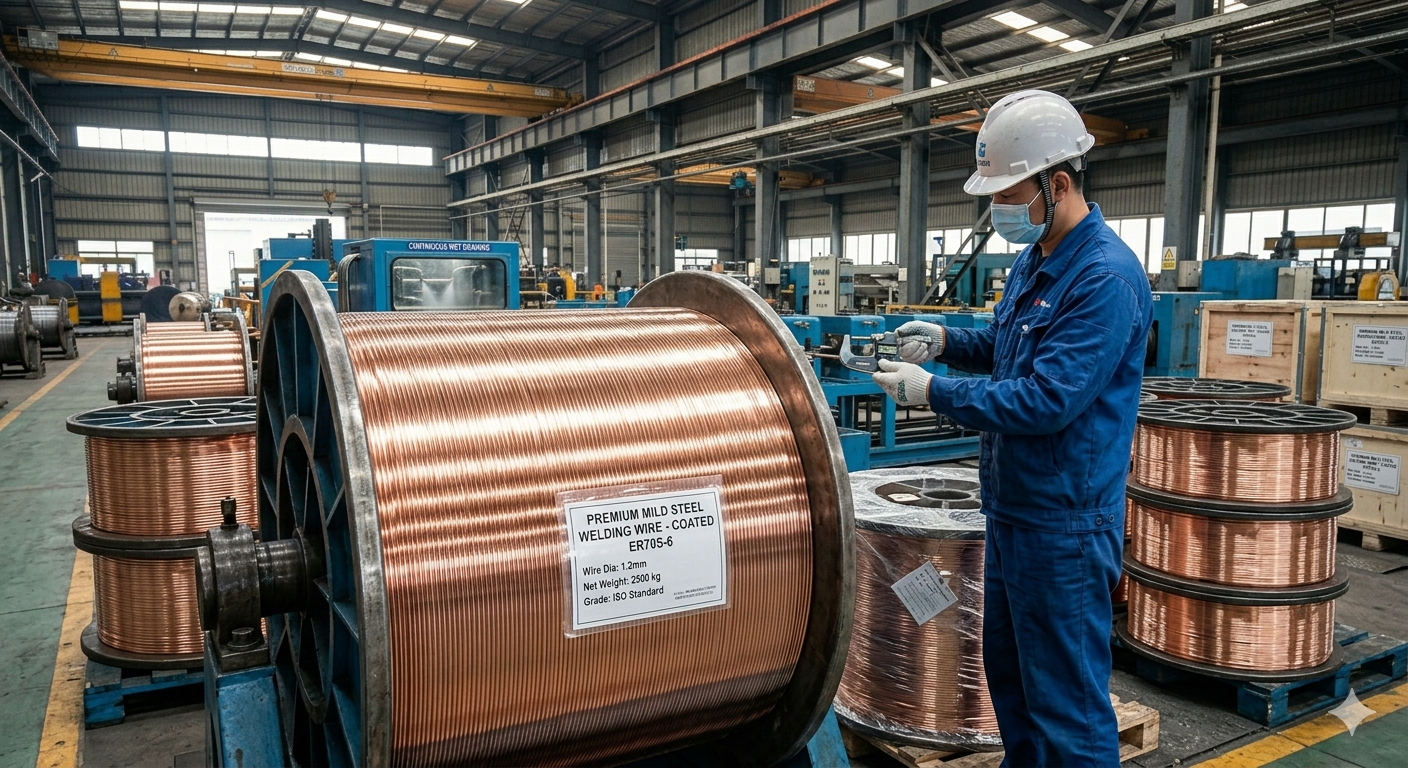
If you make solid MIG wire (like ER70S-6) or flux-cored wire, welding wire drawing isn’t just about hitting the final diameter. It’s about running stable at speed without turning your dies into consumables—and ending up with a surface condition that won’t create headaches in downstream steps like cleaning and copper coating.
This guide focuses on the details that tend to decide whether a welding-wire drawing line runs quietly for weeks or forces constant troubleshooting.
Why welding wire drawing is different from “generic” wire drawing
Welding wire is a finished consumable. That means surface condition matters in a way it might not for general-purpose drawn wire.
A drawing lubricant that’s perfectly fine for another application can be a poor fit here if it:
leaves residue that’s hard to remove before coating
creates inconsistent surface films that show up later as feedability issues
contributes to build-up problems during downstream processing
WESPEC’s technical overview for welding consumables notes that residual lubricant can impair cleaning/annealing and may contribute to build-up issues in certain routes (WESPEC’s overview of lubricants for welding consumables wire drawing (2025)).
Welding wire surface cleanliness after drawing starts upstream
If you’re chasing coating defects, feedability variation, or mysterious build-up downstream, start by making the drawn surface consistent. Welding wire surface cleanliness after drawing is usually determined by upstream stability (surface prep + die condition + consistent lubricant pickup), not by one “miracle” powder.
Start with the “unsexy” basics (before you blame the lubricant)
Lubricant selection matters, but it can’t compensate for upstream and mechanical problems. If you’re seeing breaks, pickup, or scoring, validate these first—otherwise you’ll keep changing powders without solving the root cause.
1) Incoming rod/wire surface condition and pre-coats
If the incoming surface is inconsistent (scale, rust, poor pickling, uneven conversion coating), your lubricant pickup will be inconsistent too.
What to check:
Is pickup variable along the coil?
Is your pre-treatment step stable (chemistry, temperature, dwell time)?
Are you tracking surface-condition defects separately from drawing defects?
The goal is an adherent, consistent surface layer that can hold lubricant and reduce metal-to-metal contact in the die.
2) Die condition, alignment, and draw schedule
Many “lubricant problems” are actually die or schedule problems.
What to check:
Die wear pattern (especially the bearing)
Alignment through the die box / capstans
Reduction per pass (heavy reductions amplify heat and friction)
If you want a quick refresher of common straight-line failure categories (breakage, surface defects, uneven drawing), Uniwin’s troubleshooting overview is a useful checklist (common problems in straight-line wire drawing).
Calcium soap vs sodium soap wire drawing: how to choose
Most welding-wire drawing lines end up living in the world of dry powder lubricants. If you’re choosing a wire drawing lubricant for welding wire, the two families you’ll hear about most are calcium soaps and sodium soaps (plus blends).
Here’s the practical difference, in plant language:
Calcium-soap systems tend to form a thicker, more cohesive lubricating film.
Sodium-soap systems tend to have a higher softening range but can form thinner films and can be more moisture sensitive.
That framing matches how WESPEC describes the two families and the role of common additives used to tune softening behavior and film properties (linked above).
When calcium-soap-rich powders are usually the safer starting point
Choose calcium-soap-rich powders when you’re fighting pressure and film collapse more than you’re fighting residue.
Common signals:
high die heat and a tendency toward pickup
heavy reductions / demanding multi-hole passes
the line is stable when film is thick, but breaks when it thins
Why it works: a thicker film reduces metal-to-metal contact under load.
What to watch: thicker films can mean more residue. If your downstream cleaning or coating route is tight, you may need to tune richness and particle size rather than assuming “more film is always better.”
When sodium-soap-rich (or more soluble) systems make sense
Choose sodium-soap-rich systems when downstream steps are driving the problem and you need more predictable cleanability.
Common signals:
coating adhesion or surface cleanliness is the main complaint
you want residue that removes more consistently
you run hot and need a higher softening window
What to watch: moisture. If your powder is clumping or behaving differently across shifts, humidity handling may be the real variable.
Blends are often the most practical answer
If your conditions swing (seasonal humidity, multiple product routes, variable speeds), blends can widen the workable window. WESPEC notes mixed soap systems are used to extend the softening range and performance range.
Powder and box details that change results more than you expect
If two plants run the “same” lubricant and get different outcomes, it’s often because of handling.
Particle size distribution (avoid “tunneling”)
Powder particle size distribution affects pickup and flow. WESPEC specifically warns that overly fine powders can cause “tunneling” and poor flow behavior.
Practical checks:
Is the powder channeling instead of flowing evenly?
Are you seeing uneven pickup bands on the wire?
Did anything change in powder morphology (supplier lot, storage, vibration)?
Moisture control (especially with sodium systems)
Humidity swings can look like lubricant “inconsistency.”
Controls that usually help:
sealed storage and FIFO usage
keep powder boxes covered when possible
record ambient humidity alongside breakage/pickup events
Powder box fundamentals
Basic, but worth stating:
keep the box level consistent (avoid “half-empty” extremes)
avoid contamination (scale, grit, mixed powders)
standardize the refill routine between shifts
Pro Tip: If you’re switching between solid MIG wire and flux-cored wire routes on the same line, treat that as a process change—not just a SKU change. Tighten your trial protocol and residue checks accordingly.
Failure-mode guide: what your symptoms usually mean
Diagnose faster by separating symptoms (what you see) from levers (what you can change).
Symptom: die pickup / metal adhesion
Common contributors:
film collapse from heat/pressure (lubricant too lean for the load)
contamination (abrasive fines)
die wear or a draw schedule that’s too aggressive
First checks:
confirm die condition and alignment
check powder flow/pickup (no tunneling)
check whether temperature is trending up pass-to-pass
Symptom: scoring / scratches
Common contributors:
worn or damaged dies
contaminants carried into the die
inconsistent pickup
First checks:
inspect incoming surface cleanliness
verify lubrication coverage and powder condition
check die surface and bearing condition
Symptom: breaks (especially when you increase speed)
Common contributors:
rising friction and heat (lubrication not scaling with speed)
die geometry/alignment problems
inconsistent pre-coat / surface condition
First checks:
record where the break happens (which pass)
correlate with die temperature and powder behavior
confirm the reduction schedule and die set-up
⚠️ Warning: Don’t treat “wire breaks” as a single root cause. A stable line usually gets there through stacked controls: surface prep + die condition + lubrication + speed/temperature management.
A practical wire drawing powder selection trial (no guessing, no hype)
There’s no universal lab test that predicts drawing lubricant performance; WESPEC notes practical verification on your specific machines remains the standard.
Use this short protocol to make wire drawing powder selection an engineering decision.
Step 1: Lock your baseline
For one product route (start with your highest-volume), document:
die set and draw schedule (reductions per pass)
line speed range
powder box settings and refill method
surface prep route
Step 2: Define acceptance criteria that avoid “claims”
Keep criteria focused on stability and downstream compatibility:
break frequency and where breaks occur
die condition trend (visual wear/pickup frequency)
drawn surface consistency and residue relative to your baseline
downstream cleaning/coating pass rate (first-pass quality, rework rate)
Step 3: Run A/B in a controlled window
Run baseline for a fixed length/tonnage.
Run the trial lubricant for the same length/tonnage.
Don’t change speed, die set, and surface prep at the same time.
Step 4: Standardize what worked
If the trial wins on stability and downstream cleanliness, lock in:
storage/handling rules
powder box refill routine
lot-change protocol (quick checks when a new batch arrives)
Where a supplier should actually help (and what to ask for)
At minimum, a supplier should be able to ask the right questions—wire grade, reductions, speed/temperature, humidity, surface prep, and downstream cleaning/coating constraints—and help you set up a rational trial.
If you need a neutral example: KRS Lubrication Products manufactures dry and wet wire drawing lubricants and related process materials, and can be evaluated like any other supplier based on fit to your line conditions and your trial results.
For internal reference pages:
dry drawing overview: dry wire drawing lubricant
wet systems overview: wet drawing lubricant
tooling category: wire drawing dies
Next steps
If you’re only going to do one thing after reading this, do this:
pick one route (ER70S-6 or your most common flux-cored build)
document baseline settings and outcomes for one controlled run
change one variable at a time (chemistry family, then particle size/handling, then richness)
That’s how you keep welding wire drawing stable without turning lubricant selection into endless trial-and-error.

Stay Updated
Get the latest insights, technology updates, product releases, and application cases from the robotics industry.
Learn More